
Airports across the country witnessed chaotic scenes on Friday after dozens of flights were either delayed or cancelled after a widespread global computer outage that also hit operations like cash withdrawal at some banks, and impacted functioning of some brokerages. Globally, the Microsoft cloud outage led to US airlines cancelling flights, but the tech giant later reportedly said its cloud services outage in the Central US region has been resolved.

RCap had proprietary investment book of Rs 2,000 crore (Rs 20 billion) as on end-March and owns stake in a host of companies.

Although now free, Mangal's ordeal may be far from over.
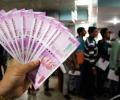
Future Gaming and Hotel Services whose director is the lottery magnate Santiago Martin is the top purchaser of electoral bonds having purchased bonds worth Rs 1,368, according to data uploaded by the Election Commission of India on its website on Thursday.

The financial creditor had approached district authorities in Raigad to take possession of ND Studio a few months ago.

Fund houses are exploring ways to differentiate themselves in the hybrid space. A relatively unknown hybrid fund variant, Balanced Hybrid, is about to see its first launch since the introduction of mutual fund (MF) scheme categorisation norms in 2017. WhiteOak Capital MF has filed papers with the regulator for this scheme, which comes amid increasing interest in the hybrid space. MFs anticipate that hybrids will become the preferred category for investors with a lower risk appetite following changes in debt fund taxation.

Capital markets regulator Sebi has permitted mutual funds to again invest in foreign stocks within the aggregate mandated limit of $7 billion for the industry. This came in the wake of a major correction in global markets that brought down the valuation of international stocks. In January, Sebi had asked mutual fund houses to stop taking fresh subscriptions in schemes investing in overseas stocks. The directive to stop subscription was mainly on account of the mutual fund industry crossing the mandated limit of $7 billion for overseas investments.

The change in debt fund taxation is seen as boosting the demand for hybrid funds. It is no surprise then that asset management companies (AMCs) have launched a raft of new products in the multi-asset category. However, they seem to be divided on the asset mix and approach. The multi-asset space, which provides fund houses ample scope to innovate, has seen five launches in as many months.

rediffGURU Ramalingam Kalirajan answers your personal finance queries.

Tata AIG, ICICI Lombard and Nippon Life have evinced interest for the profit-making insurance arm of Reliance Capital (RCap), joining several prominent financial companies from India and abroad in the race for RCap's assets. The final day to submit an expression of interest (EoI) was March 25 and the bidders will now get access to the latest information about RCap before they make financial bids.

Actively-managed large-cap mutual fund (MF) schemes have managed to regain some lost sheen this year after faring poorly in the 2022 calendar year (CY22). At the end of the first six months (H1) of CY23, 78 per cent of the active large-cap schemes were ahead of the Nifty50 index funds as against just 26 per cent in 2022. When compared to the Sensex index funds, 61 per cent active funds have delivered better returns, shows an analysis of Value Research data.

Exuding confidence in setting up a profitable banking venture, industrialist Anil Ambani on Tuesday said the proposed bank will help lower Reliance Capital's debt to one-fourth of current levels and would be listed as a separate entity in three years.

Measures reportedly being mulled by the government to ease telecom industry's stress and fundraising may give Vodafone Idea the much-needed breather, but structural issue undermining the sector can be fixed only with "sizable" tariff hike for 4G prepaid customers, according to a note by Edelweiss. It further observed that as Voda Idea's large liabilities are falling due, and given the impending launch of JioPhone Next (whose rollout timeline has now been pushed to before Diwali), "the sooner the government measures as well as tariff hikes are rolled out, the better it is". It is pertinent to mention here that the telecom sector has been keenly watching out for the relief package, which could include redefinition of Adjusted Gross Revenue (AGR) to exclude non-telecom items, cut in levies such as Spectrum Usage Charges and easier terms and conditions for surrendering radiowaves to the government.

Investors not comfortable investing directly may take the mutual fund route, where they get exposure to a diversified portfolio of bonds.

After dropping to a low of Rs 1,298 apiece, the stock finished at Rs 1,380, its lowest level since November 22, the second day of listing.

Bharti Airtel's fund raising is expected to strengthen its competitive positioning in the market and provide the telco with the necessary ammunition for aggressive 5G rollout, analysts said. The capital raising announcement, though unexpected and surprising, would enable Airtel to enhance its market share and provides it wherewithal to make faster investment in a scenario India moves to a two-player market earlier than expected, some analysts felt. Bharti Airtel's board on Sunday approved raising up to Rs 21,000 crore by way of rights issue at a price of Rs 535 per share.

The real estate sector had been going through a rough phase even before the COVID-19 crisis, marked by falling sales and piling up of inventories.

Omkeshwar Singh, Head, Rank MF, a mutual fund investment platform, answers your queries.

An NCD's credit rating will tell you whether risk possibility is high or low. Instruments rated below AA are regarded as high-risk.

More and more PE players are willing to test the waters now, just in case they become early entrants in a future booming business.

Investments by private equity and venture capital funds into Indian entities fell by 69 per cent to $3 billion during July, a report said on Wednesday. The investments in July are the lowest for any month in a year, and lower than the $4.9 billion recorded across 118 deals in the preceding month of June, the report by industry lobby IVCA and consultancy firm EY said. Going by the number of deals, July 2022 recorded 74 deals, as against 134 deals in the year-ago period, the report said.

Foreign currency loans raised by Indian companies nosedived to $210 million in the September quarter (Q2), 93.3 per cent less than the year-ago period when five firms raised $3.1 billion. The Q2 amount is the lowest since December 2003 quarter when India Inc raised $191 million. Companies cited volatility in the currency markets, sharp rise in interest rates in the United States, and fund availability in India as the main reasons behind the sharp fall.

Aided by the $57.8-billion merger of HDFC Bank and HDFC, India Inc reported its highest ever mergers and acquisitions in calendar 2022 at $171 billion as against deals worth $145 billion announced last year. The acquisition by the Adani group across cement, media and ports dominated the headlines with the conglomerate making its foray into the cement sector by buying Swiss materials firm Holcim's stake in Ambuja Cements for $6.5 billion. The Adani family's additional $4-billion open offer for Ambuja did not get a response because shareholders preferred to stay invested with the new owner.

There, however, has been an improvement in operating margins.

Balanced advantage funds have the potential to earn superior risk-adjusted returns for the investor and offer a smoother investment journey.

Promoters' holding in private sector BSE 500 companies declined to 43.4% in Sept

Hectic fundraising through IPOs will continue next week, with three firms -- One97 Communications, owner of Paytm; Sapphire Foods India, which operates KFC and Pizza Hut outlets; and Latent View Analytics -- are set to launch their initial share-sales to collectively mop up about Rs 21,000 crore. This comes after five companies successfully concluded their public offerings (IPOs) this week. Those five firms are - FSN E-Commerce Ventures, which runs online marketplace for beauty and wellness products Nykaa; Fino Payments Bank; Policybazaar parent entity PB Fintech; decorative aesthetics supplier SJS Enterprises; and microcrystalline cellulose maker Sigachi Industries.

Ulhas Joshi, Head -- Sales, Rank MF, a mutual fund investment platform, answers your queries.

The turmoil on the Street and a continued fall of the rupee may affect growth stocks, pushing equity investors back to the relative safety of defensive counters, or forcing them to flee markets, or both.

Declining commissions, stagnant markets and increased foreign competition have forced brokerages to enter into marriages as well as new businesses.

'Many of those who invested in NCD issues are those who traditionally put their money in fixed deposits...'

Investors seem to have fully savoured the Burger King India IPO, with the share sale getting subscribed a massive 156.65 times on the last day of the offer on Friday.

Ulhas Joshi, Head -- Sales, Rank MF, a mutual fund investment platform, answers your queries.
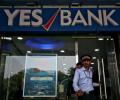
Following the 30-day moratorium placed on Yes Bank, asset management companies have asked their clients, who have bank accounts with the troubled lender, to furnish details of alternate accounts for receiving redemption payouts. Redemption is the return of an investor's principal on a fixed income security such as a bond, mutual fund or preferred stock.

Nikunj Saraf, Vice President Choice Wealth, answers your queries.

Nikunj Saraf, Vice President Choice Wealth, answers your queries.
Given that there has been no negative news flow around Zomato, analysts believe it's time to lap up the shares at lower levels.

Shares of Indian Railway Catering and Tourism Corporation (IRCTC) hit a new high of Rs 4,512 after surging 8 per cent on the BSE in Wednesday's intra-day trade, on the back of heavy volumes, ahead of 1:5 stock split. The trading volumes on the counter more-than-doubled today, with a combined 7.02 million equity shares having changed hands on the NSE and BSE till 11:19 am. In the past one week, the stock of the state-owned travel support services company has rallied 20 per cent after the company on September 29, 2021, said that it has fixed October 29, 2021 as the record date, to ascertain the name of shareholders entitled for subdivision/split of equity shares of Rs 10 each into five (5) equity shares of face value of Rs 2 each.

IPO-bound mobility platform Ola, said it has successfully raised $500 million via a Term Loan B (TLB) from marquee international institutional investors. This term loan has no impact on the valuation of Bhavish Aggarwal-led Ola. The Bengaluru-based firm recently raised $139 million. This is part of a $1 billion funding round for which the company is in talks with investors, increasing its valuation to about $7.5 billion, according to the sources.

Nikunj Saraf, Vice President Choice Wealth, answers your queries.
